Hungarian Startup Makes Its Drive-Through Coronavirus Software Free to Use
The first official coronavirus case in Hungary was reported at the beginning of March. A few weeks later, due to the increasing number of cases, the Hungarian government decided to introduce movement restrictions. The restriction brought the country’s usual operations to a halt for an entire month, causing some small and private businesses to close and tens of thousands of people to become unemployed. In response to the pandemic, Rollet, a Hungarian startup, began developing software for drive-through coronavirus testing by car, which they are now making widely available and free to use in order to support a rapid response to any potential next wave.

The technology for drive-through coronavirus testing was first launched in Budapest in April, where several hundred visitors were tested within just a few days with the help of the innovation. Drive-through testing had already been used in Asian countries before the Hungarian solution, but due to paper-based administration, these systems proved to be slow and, because of physical contact, also carried a risk of infection. The essence of the contactless solution developed by the startup is that patients arriving at the testing station must first register their personal details and vehicle information in order to become eligible for on-site coronavirus testing. The data recording process itself is also paperless and contactless, as the identity of those authorised to enter the testing station is verified through an application. During sampling, the sample labelled with a serial number and the patient are matched using a QR code through an app interface developed for the staff working in the sampling zone.
“From the very beginning of the planning phase, the team and I agreed that we would make the finished product widely available so that countries could respond immediately and effectively to the next crisis caused by an epidemic. By recording data in the cloud through an application, the capacity of the testing area can double compared to a paper-based administrative process, which can be extremely important during periods of mass testing. There is no unified position on whether the coronavirus will cause another wave of infections in the autumn; however, our application offers a very fast and efficient solution for identifying patients.”
— Andy Zhang, Founder and CEO of Rollet
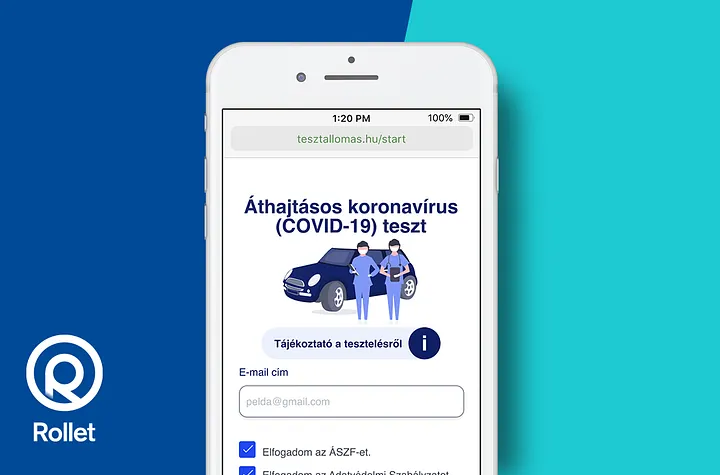
The project, named “Noé”, is free to use and, thanks to the MIT licence, can be freely developed further by private companies or government organisations. It is available at Github.com/rollethu/noe. In addition to unrestricted use, according to the startup, the system makes it possible to launch a drive-through testing station at any selected location within just a few days. The source code, even without further development, is suitable for receiving and sampling several thousand visitors. The programme can be used not only for coronavirus testing, but also for the rapid detection of any virus where a vehicle provides a suitable environment for sampling or screening.
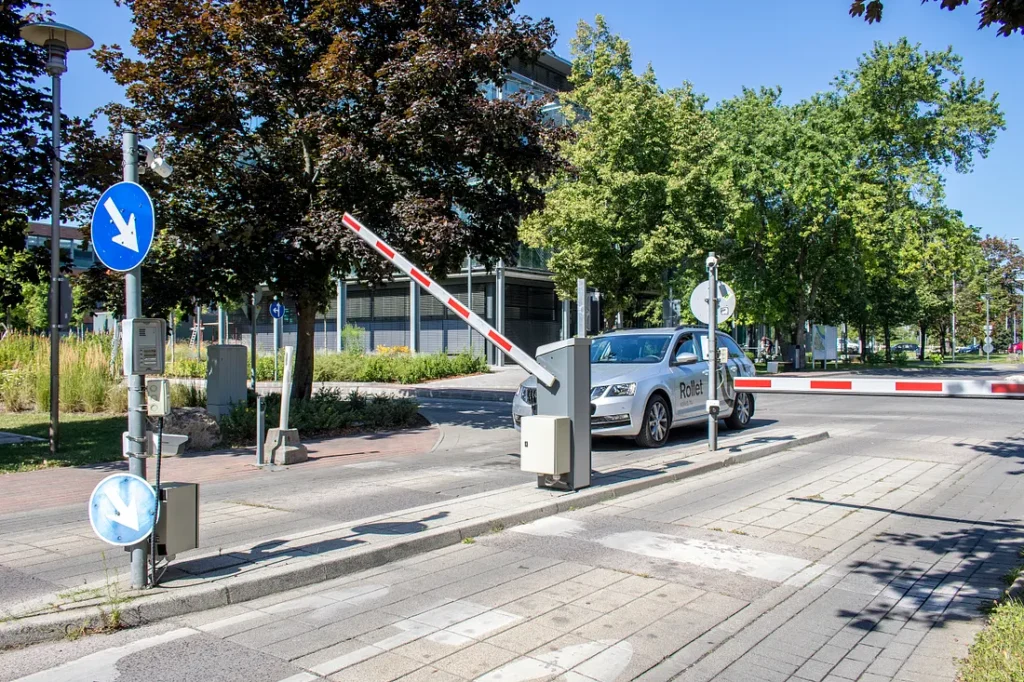
Rollet launched its contactless payment service in Hungary in 2017. Since then, it has made cashless, vehicle-based payment available to visitors at dozens of locations, including gated car parks, office buildings, factory sites, and business parks. In 2020, the international tech magazine The Next Web selected Rollet as one of Europe’s best Hungarian startup innovations, while last year the audience of the Vienna Property Forum voted it the “Most Promising Startup Company”. Hiventures, within the framework of the Széchenyi 2020 programme, has so far supported the expansion of the vehicle-based technology with HUF 310 million.